
RPMG IVF Laboratory
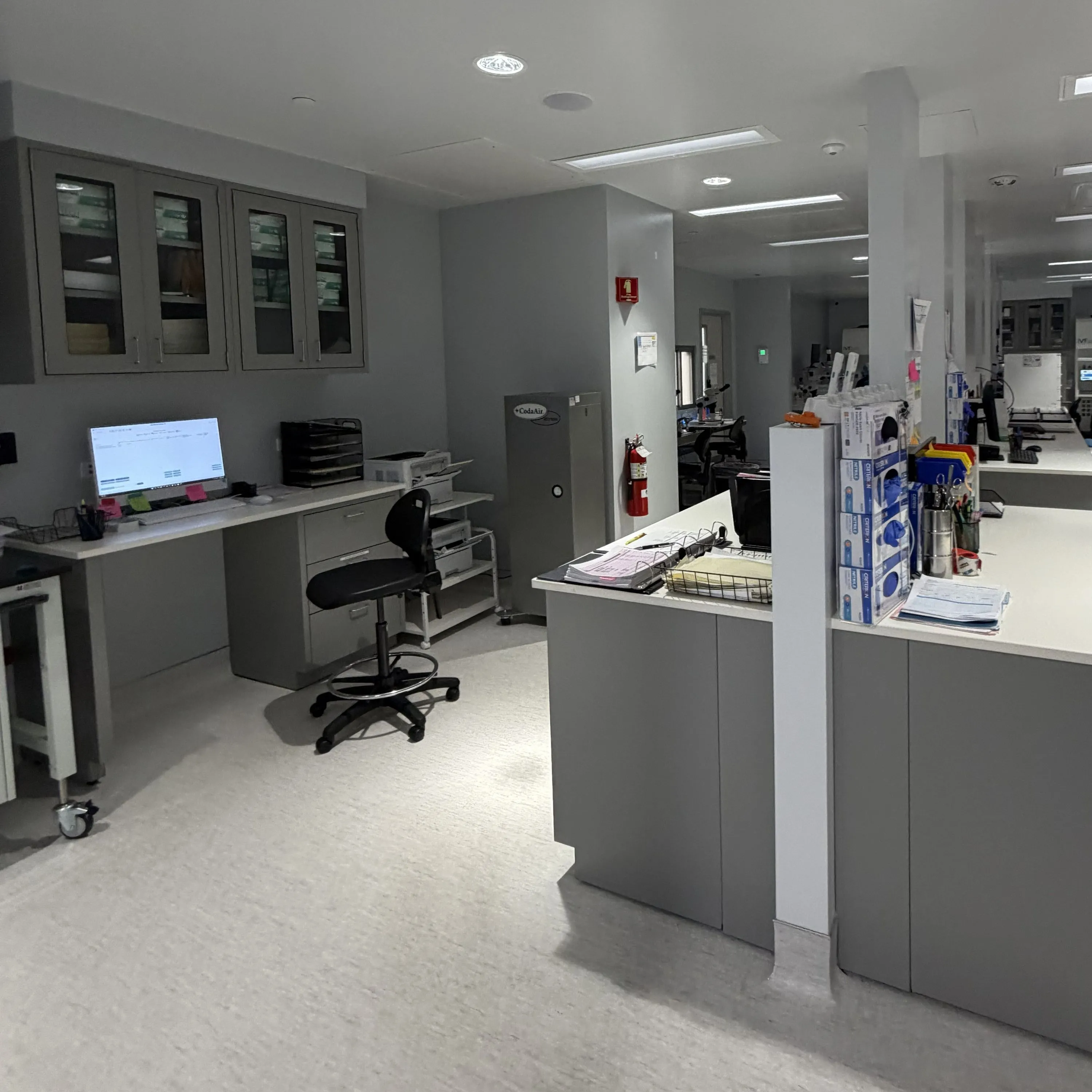
The RPMG Laboratory, led by Mitchel C. Schiewe, provides a public introduction to electronic witnessing, Boreas liquid nitrogen weight monitoring, independent HVAC, redundant monitoring, and backup power supply.
Laboratory manager
Mitchel C. Schiewe, M.S., Ph.D., directs the IVF laboratory and has a research and clinical background involving ICSI, embryonic development, vitrification, and laboratory quality practices.
Identity verification and freezing monitoring
The official website introduces electronic witnessing technology to record sample links during treatment; when electronic witnessing cannot be used, double verification is used. The refrigerated storage tanks use weight-based Boreas liquid nitrogen monitoring with redundant monitoring.
Environment and continuous operation
Standalone HVAC manages air, particles and VOCs; backup generators and UPS provide power to critical equipment. The disclosure process also involves external preservation, sample transfer partners, and disaster contingency planning.
How to connect electronic witnessing and manual verification
RPMG publicly states that it uses electronic witnessing technology to form a visual circulation chain of samples through recording operations, covering the identification of samples such as eggs, sperm, embryos, and testicular tissue. When electronic witnessing is not available, manual witnessing involving two staff members is used.
Identity verification is used to confirm sample ownership; culture evaluation is used to observe development. They are different records, and they all need to continue to correspond to patients and cycles when entering the detection, freezing, thawing, or delivery links.
Liquid nitrogen weight monitoring and backup monitoring
Frozen samples are stored in liquid nitrogen storage tanks. In addition to monitoring the tank itself, RPMG also uses the Boreas weight monitoring system to track changes in liquid nitrogen weight and set up redundant monitoring to deal with the failure of the main monitoring system.
Weight monitoring focuses on changes in liquid nitrogen storage, which is different from the measurement object of temperature monitoring. Tank monitoring does not replace preservation protocols; patients should still retain preservation instructions, specimen records, renewals, and future disposal authorizations.
External storage, transportation and reporting handover
The official website laboratory description lists external storage and sample transportation as cooperation links that need to be managed. When sending out samples, the sender, receiver, transporter and storage subject must be recorded separately; sending medical record reports and transporting frozen samples are also different matters.
The clinical and laboratory teams determine acceptance, required records, and timing. RPMG's Irvine location only provides monitoring, and it cannot be presumed based on the address that samples are also being stored there.
Irvine Monitoring LocationInternational patient cycle connectionLaboratory reports during treatment
The fertilization report records the fertilization situation, the culture report records the embryonic development, and the detection report records the inspected items and conclusions. After cryopreservation, the quantity, status, storage subject and renewal information should also be saved for future transfer or transfer.